BlackRock Buying Houses Myth vs Reality in Real Estate
Rumors that BlackRock is buying houses en masse frequently circulate online, fueling public speculation about institutional control over residential real estate. But what’s fact, and what’s fiction? In this in-depth article, we’ll examine BlackRock’s actual role in housing markets, clarify misconceptions, explore real use cases and strategies in residential real estate, understand how technology plays a role, present case examples, dissect benefits and risks, and discuss what this means for homeowners, renters, and investors.
The Origins and Persistence of the BlackRock House‐Buying Narrative
Over the past few years, many headlines have suggested that BlackRock is acquiring large swaths of single-family homes, outbidding everyday buyers and reshaping housing markets. This narrative often conflates BlackRock with more aggressive house-buying firms or private equity investors.
In reality, BlackRock has publicly stated that it does not purchase individual houses in the U.S. It manages real estate assets on behalf of its clients, invests in multifamily, mortgage securities, and provides financing for new construction, but direct acquisition of single-family homes is not part of its stated business model.
The misconception persists partly because institutional real estate investors (other firms) do engage in single-family rental ownership, and the distinction between asset manager and owner becomes blurred in public discourse. Moreover, online memes and fear narratives amplify the idea of large institutions “owning your home,” even when such claims lack concrete backing.
That said, institutional influence in housing purchasing is real many firms aggregate single-family rentals, manage portfolios, or invest in residential development projects. The key is distinguishing BlackRock’s actual activities from more aggressive residential acquirers.
How Asset Managers Like BlackRock Participate in Residential Real Estate
Even if BlackRock does not buy individual houses, it still participates in the residential space in a number of ways. Understanding these channels helps clarify how institutions shape housing markets.
First, mortgage and debt financing: BlackRock invests in mortgage-backed securities, mortgage pools, and credit instruments related to housing. In doing so, it provides liquidity to mortgage markets, indirectly supporting home purchase financing.
Second, investment in new development and build-to-rent: BlackRock sometimes invests capital into new residential development projects, especially single-family rental communities or purpose-built rental housing. In such cases, the properties are constructed for rent, not sold individually.
Third, multifamily and large residential portfolios: Rather than individual houses, BlackRock is more active in apartment buildings, multifamily developments, mixed-use residential projects, and institutional-scale rental complexes.
Fourth, acquisitions of real estate firms: For example, BlackRock acquired ElmTree Funds a private real estate firm focused on commercial and industrial properties. While this doesn’t equate to buying houses, it shows how BlackRock is expanding its real estate footprint.
Therefore, BlackRock’s involvement with housing is more structural and capital-intensive rather than direct mass house-buying.
Examples & Use Cases in Institutional Residential Real Estate
To make this concrete, here are real-world or plausible scenarios aligned with institutional strategies in residential real estate some involving firms like BlackRock, others analogous.
1. Build-to-Rent Suburban Developments

An institution funds the development of a community of single-family houses designed specifically for rental living. These are built with economies of scale, consistent design standards, modern amenities, and centralized property management. Investors receive rental income and property appreciation similar to multifamily but in single-family form.
2. Multifamily Apartment Complexes
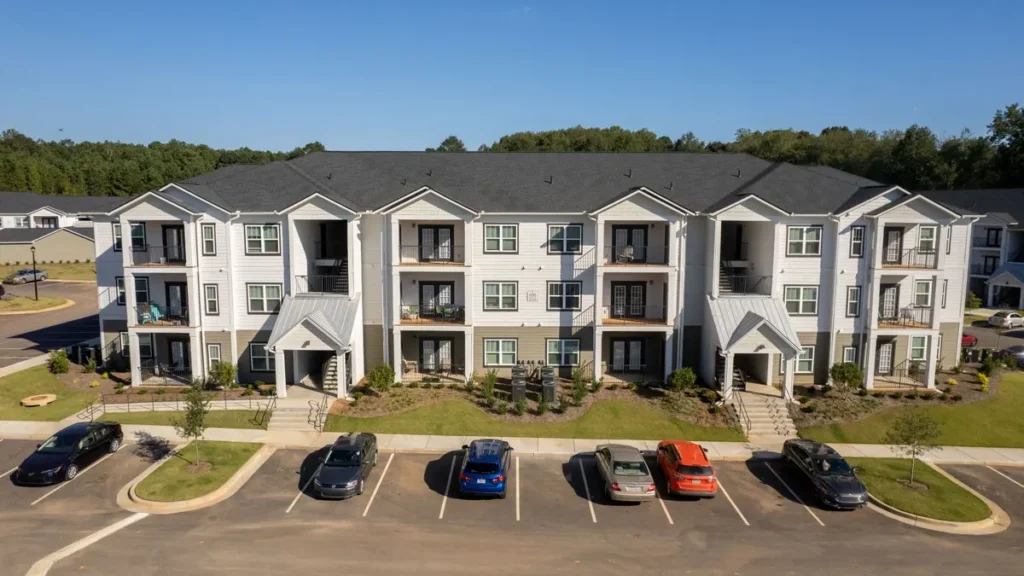
BlackRock (or its real estate affiliates) might acquire large apartment complexes in urban or suburban markets. These properties provide scale, diversified tenant base, and robust leasing dynamics. Because they manage entire buildings rather than individual homes, risk and maintenance burdens are centralized.
3. Mortgage Financing and Secondary Markets

While not owning homes directly, BlackRock may invest heavily in mortgage-backed securities or securitized loans, which are tied to residential real estate. This exposure allows it to benefit when mortgage markets expand even without house ownership.
4. Acquisition of Real Estate Platforms

By acquiring real estate companies or managers that handle residential assets, BlackRock can gain exposure to the residential sector indirectly. For example, ElmTree Funds is a recent acquisition in the real estate private markets. While ElmTree is more commercial/industrial, the model exemplifies how institutional firms grow platform capabilities.
5. Partnerships for Mixed-Use or Residential Projects
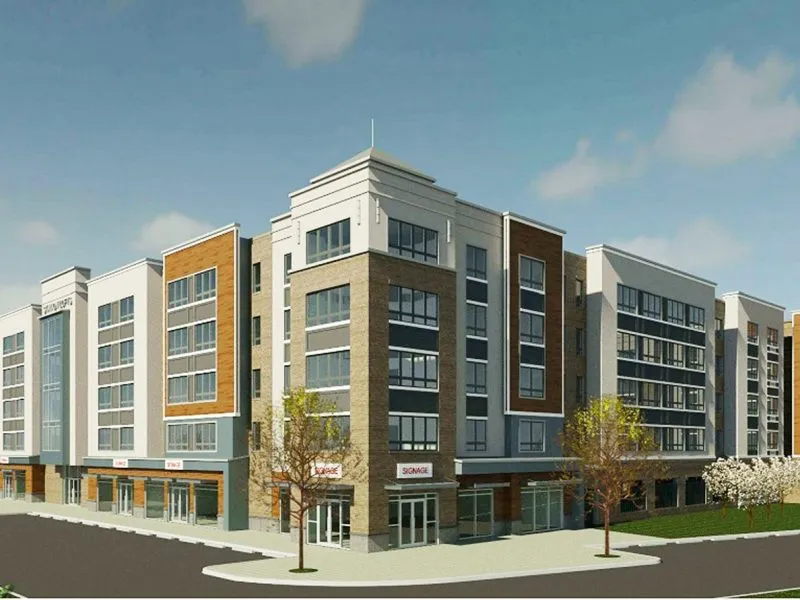
BlackRock may partner with developers to co-invest in residential or mixed-use properties, integrating residential units with commercial or retail components. The residential portion may be part of a broader institutional real estate strategy rather than isolated single-family acquisitions.
These examples highlight that institutional investors often engage residential real estate through strategic, large-scale, or development-based models rather than mass-buying individual homes.
Benefits and Practical Advantages of Institutional Residential Investment
Institutional approaches to residential real estate through development, multifamily, or build-to-rent offer several advantages:
Scale and Efficiency
Managing many units together allows cost efficiencies in maintenance, property management contracts, leasing, and tenant services.
Better Risk Diversification
Aggregated portfolios dilute single-unit risk like vacancy or localized declines, making returns smoother.
Access to Capital and Attractive Financing
Institutions can secure lower-cost financing, favorable terms, or long-horizon debt structures unavailable to small landlords.
Professional Operations and Standards
Institutional management tends to enforce consistent standards, technology-enabled operations, and tenant services improving retention.
Long-Term Strategy & Exit Options
They can hold for long-horizon strategies, reposition properties, or execute portfolio sales at optimal times. The flexibility to convert, redevelop, or reallocate capital is significant.
Market Influence
Because institutions deploy large capital, their decisions affect pricing, development standards, policy attention, and rental markets in the neighborhoods they invest in.
These benefits make institutional residential investment a potent strategy under the right conditions.
Use Cases: Problems Institutional Residential Capital Solves
Here are practical problems that institutional capital in residential real estate helps address:
1. Shortage of Rent-Appropriate Housing
In markets where supply is tight, institutional capital into build-to-rent or multifamily addresses rental demand, increasing quality supply for renters.
2. Professionalization of Housing Stock
Many small landlords under-maintain properties. Institutional ownership raises operation standards, maintenance consistency, and tenant protections.
3. Redevelopment and Urban Renewal
Institutions can invest in outdated residential zones or mixed-use renewal projects, revitalizing neighborhoods and increasing property values.
4. Liquidity for Developers
Developers may require equity or capital infusion to realize residential projects. Institutions provide large-scale capital enabling projects that might otherwise stall.
5. Risk Allocation for Large Capital Pools
For large investors needing to allocate significant sums, residential or mixed housing is a real asset class that complements commercial holdings, diversifies exposure, and matches liability profiles.
These use cases reveal how institutional residential investment is more than buying houses it’s about shaping communities, markets, and capital flows.
Risks, Misconceptions, and Critical Considerations
Institutional residential investment is not without challenges. Moreover, many misconceptions swirl around the idea that BlackRock is buying houses outright.
Myth vs Reality
Many rumors misinterpret statements or confuse BlackRock with firms that do house-buying (like Blackstone). Public clarifications indicate BlackRock does not acquire individual houses.
Valuation Sensitivity & Market Cycles
Residential real estate prices and rental demand are cyclical. In downturns, lease renewal, tenant default, or value declines may hit portfolios hard.
High CapEx and Maintenance Costs
Residential units differ: roofs, plumbing, HVAC, and wear-and-tear vary across units. Institutions must maintain reserves, or returns will erode.
Regulatory & Zoning Risks
Rental regulations, rent control, eviction moratoria, or zoning constraints can limit revenue upside and operational flexibility.
Tenant Experience & Reputation Risk
Institutional ownership may face backlash if perceived as impersonal or exploitative. Community response matters when large players enter neighborhoods.
Concentration and Geographic Risk
Portfolios concentrated in one metro or region are vulnerable to local economic shocks.
Liquidity Constraints
Unlike stocks, real estate cannot be liquidated quickly. Institutions must plan exits carefully and preserve optionality.
Investors and policymakers must weigh these risks when interpreting institutional activity in housing markets.
Conclusion
The phrase BlackRock buying houses often misleads more than it informs. While institutional real estate investment in residential sectors is real, BlackRock’s direct involvement in individual house acquisition remains unsubstantiated by public disclosures. Instead, the firm operates through capital deployment in mortgages, development projects, multifamily assets, housing finance, and acquisitions of investment platforms.
Understanding how institutions engage residential real estate via scale, development, financing, or partnerships— paints a clearer picture than viral rumors. For homeowners, renters, and market watchers, distinguishing myths from institutional strategy is key to interpreting how housing markets evolve amid rising capital flows.
FAQ
1. Does BlackRock actually own individual houses?
No credible evidence shows BlackRock acquiring single-family homes directly. The firm has publicly stated it does not buy individual houses in the U.S. BlackRock
2. Why do many believe BlackRock is buying houses?
Confusion arises because institutional real estate investors do buy housing assets, and because BlackRock engages in real estate broadly. Misattribution, viral narratives, and conflating BlackRock with house-buying firms sustain the myth.
3. How can institutional residential investment impact housing markets?
Through increased supply in rental housing, modernized operations, pricing influence in certain neighborhoods, and capital-backed redevelopment. But impact is highly localized, and national scale remains limited relative to the total housing stock.