Blackstone Buying Houses Insight into Institutional Home Acquisitions
In recent years, the phenomenon of Blackstone buying houses has drawn attention from market watchers, homeowners, and policymakers alike. When a leading private equity firm acquires large portfolios of single-family homes, it raises questions about scale, strategy, affordability, and returns. This article delves deeply into how Blackstone invests in residential housing, its rationale, mechanics, examples, technological enablers, benefits, risks, and the real-world effects on housing markets.
Why Blackstone Is Buying Houses
Blackstone’s entry into the single-family home space reflects several converging trends. First, housing supply constraints and rising home values in many markets limit opportunities for new construction, pushing demand toward existing homes. Second, the rental market remains strong, particularly in areas where affordability has slipped for first-time buyers. Owning homes to rent provides asset-backed income streams in a sector that historically offered stability.
Moreover, institutional capital seeks less correlated asset classes. Residential real estate, especially single-family rentals, offers diversification away from commercial REITs or traditional stocks. For firms like Blackstone, which manage large pools of capital, scaling in housing offers the potential for steady yield and appreciation when executed carefully.
Additionally, Blackstone (and its related real estate vehicles) can benefit from operational scale, standardizing maintenance, leveraging economies in contracting, automating tenant services, and aggregating data. Over time, those efficiencies can improve returns versus small landlords who lack scale.
How Blackstone Acquires and Manages Home Portfolios
At its core, Blackstone’s strategy in residential acquisition involves buying homes (often single-family units), consolidating them into a portfolio, and treating them as institutional rental assets. These properties are then leased to households under professional property management regimes, rather than being held for resale in the near term.
Key mechanics in this model include:
-
Acquisition sourcing: identifying undervalued or distressed properties, foreclosures, or bulk home packages.
-
Due diligence & underwriting: assessing neighborhood quality, rent potential, maintenance cost forecasts, vacancy risk, and financing costs.
-
Standardized management: using professional property management operations with clear processes for maintenance, tenant turnover, rent collection, and property servicing.
-
Technology use: deploying software platforms to track maintenance, monitor occupancy, automate tenant engagement, predict repair needs, and control costs.
-
Portfolio optimization: periodically reviewing property performance, selling underperforming units, and reallocating capital to better markets.
Over time, Blackstone reaps rents, property appreciation, tax benefits (such as depreciation), and potential exit gains. Because it operates on a large scale, the firm also benefits from lower per-unit operational costs and centralized oversight.
Real-World Examples of Blackstone’s Home Buying Efforts
Here are several documented instances where Blackstone’s residential acquisition strategy is evident:
1. Acquisition of Tricon Residential

In a significant transaction, Blackstone acquired control of Tricon Residential, thereby adding tens of thousands of single-family homes to its rental portfolio. This move placed Blackstone among the top institutional owners in the U.S. single-family home rental market.
2. Portfolio from Home Partners of America

Blackstone previously purchased or invested in Home Partners of America, a company holding thousands of homes leased to individuals under rent-to-own or fixed-term rental arrangements. This gave Blackstone exposure to stabilized rentals and optionality in eventual sale or conversion.
3. Conversion to Institutional Single-Family Rental Owner

Through its residential real estate vehicles, Blackstone has gradually built a portfolio of homes across growth markets, treating them as long-duration rental assets, akin to multifamily but at the scale of individual homes.
4. Voluntary Portfolio Sales for Recycling Capital
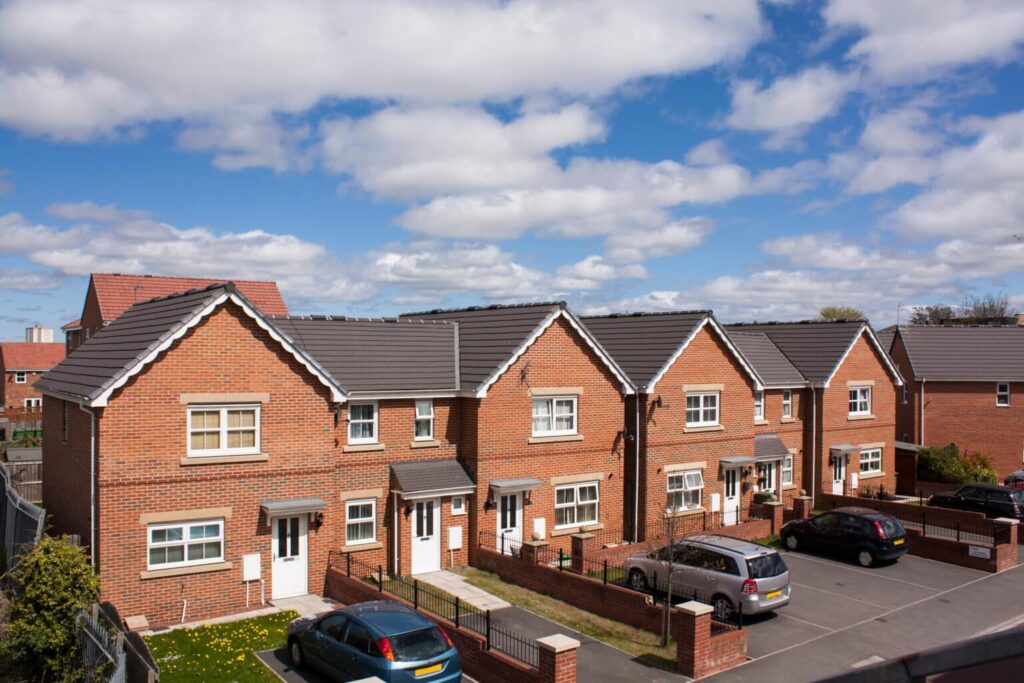
From time to time, Blackstone divests chunks of its housing portfolio, selling batches of homes or shared-ownership homes to pension funds or public institutions as part of capital recycling and yield optimization.
Each of these examples showcases how Blackstone aggregates, operates, and rebalances its home holdings, often leveraging scale and management sophistication to extract returns in a competitive housing market.
Benefits and Advantages of Blackstone Buying Houses
Institutional home acquisition strategies carry distinct benefits relative to smaller-scale ownership:
-
Economies of scale and operational efficiency
By managing thousands of homes, Blackstone can optimize procurement, maintenance contracts, insurance, and management systems. Cost per unit falls. -
Professional tenant services and amenities
Institutional landlords can deliver better tenant experience through online portals, maintenance responsiveness, and standardized quality, which can reduce turnover and vacancy. -
Capital access and funding advantages
As a large firm, Blackstone can secure favorable financing, lower borrowing costs, and diversified capital sources not available to individual landlords. -
Diversification and de-risking
Exposure across multiple markets, neighborhoods, and property types spreads the risk of local downturns or regulatory changes. -
Transparency and data-driven decisions
Access to advanced analytics, predictive maintenance, and market trend modeling helps limit downside and optimize revenue. -
Tax and value appreciation opportunities
The combination of rental income, depreciation shields, and growth in home values gives multiple return levers.
However, these advantages only manifest with disciplined execution, careful underwriting, and robust management.
Use Cases and Real-Life Applications
Blackstone’s residential strategy solves several real-world investment and market challenges:
1. Institutionalizing the Single-Family Rental Sector
Historically fragmented, the single-family home rental sector lacked standardization. Blackstone’s scale brings professionalism, reducing disparities in quality, driving standard rules for leasing, maintenance, and tenant treatment.
2. Addressing Housing Supply Gaps
In markets where new home construction is constrained, Blackstone’s infusion of capital can convert underused or distressed properties into quality rentals, absorbing pent-up demand.
3. Offering Rent-to-Own or Shared Ownership Options
Some homes in Blackstone’s portfolio may be structured to allow tenants to gradually purchase, linking capital return with social mobility and tenant retention.
4. Capital Recycling and Yield Seeking
Blackstone can shift capital across markets dynamically,y selling homes in slower markets, reinvesting in faster-growing ones, and optimizing portfolio returns.
5. Hedging Against Equity and Bond Volatility
Real estate adds non-correlated asset exposure. Institutional homes provide a stable yield anchor in a diversified portfolio.
These use cases illustrate that Blackstone’s home-buying is more than owning ho;ses, it’s implementing a scalable, institutional rental platform.
Risks, Challenges, and Considerations
While potentially lucrative, large-scale home acquisition also has significant risks:
-
Market downturns and home value declines
Residential real estate can suffer in recessions, reducing both rental demand and property appreciation. -
Regulatory and tax changes
Local rent control laws, eviction restrictions, property taxes, or zoning changes can affect yield projections. -
Tenant risk and turnover costs
Maintaining occupancy, managing defaults, and turnover expenses can erode net returns. -
Maintenance, capital repair burden
Homes require frequent repairs (roofs, HVAC, plumbing), and older homes are more vulnerable. Those costs can compound. -
Concentration and geographic risk
Overexposure to specific metro areas makes portfolios vulnerable to regional economic shocks. -
Reputational and social backlash
When large institutions buy neighborhoods, concerns over affordability, displacement, or monopolistic behavior may attract scrutiny. -
Execution complexity
Managing loan portfolios, disparate housing types, and small-scale property idiosyncrasies demands robust systems and talent.
Institutional players must address these challenges proactively with reserves, conservative leverage, market diversification, governance, and community relations.
Conclusion
The narrative of Blackstone buying houses encapsulates a shift in residential real estate from fragmented mom-and-pop ownership to institutional-scale platforms. Blackstone’s strategy blends real estate fundamentals with data, scale, and professional operations to build large rental portfolios of single-family homes.
This approach provides yield, diversification, and growth potential, but only to those who can manage underwriting rigor, capital flows, regulatory exposure, and tenant operations. For investors and observers, Blackstone’s moves in housing offer lessons about the future of residential markets and the power of capital at scale.
FAQ
1. Why is Blackstone interested in single-family homes rather than just commercial real estate?
Single-family homes offer diversification, stable tenant demand, and potential for higher yields in constrained housing markets. They also provide a new avenue beyond traditional commercial sectors.
2. How does Blackstone manage maintenance and operations at scale?
Blackstone deploys standardized operations, centralized property management systems, predictive maintenance tools, and economies of scale in contracts and services.
3. Can institutional home buying worsen housing affordability?
Critics argue it could reduce owner-occupancy opportunities and push up rents. But proponents suggest that well-managed institutional portfolios maintain quality, stabilize neighborhoods, and may even enable rentals where homeownership is not feasible.